

Cash flow, creativity, and compassion are not mutually exclusive™

Empathy Is Your Superpower. But Can You Prove It?

We talk a lot about empathy in leadership circles. And the data behind why we should is overwhelming.

According to EY’s 2023 Empathy in Business Survey — a study of more than 1,000 employed Americans — 88% of employees say empathetic leadership fosters loyalty, and the vast majority agree that mutual empathy between leaders and employees drives greater efficiency, creativity, and job satisfaction. Businessolver’s 2024 State of Workplace Empathy Report, which surveyed more than 3,000 employees, HR leaders, and CEOs, found that 77% of employees would work longer hours for a more empathetic employer — and 60% would take a pay cut to work for one. And McKinsey research confirms that people who feel genuinely empathized with innovate more, take more creative risks, and work harder and faster. 

We know empathy matters. Leaders know it. HR knows it. Employees know it.

But here’s the question nobody is asking loudly enough: Can you actually prove you have it?

Not on a self-assessment. Not in a performance review. In real time, under pressure, collaborating with others toward a shared goal.

The Empathy Credibility Gap

There’s a growing disconnect between how much organizations say they value empathy and how well they actually hire, develop, and recognize it. Behavioral interview questions like “Tell me about a time you showed empathy” measure storytelling ability more than actual skill. And listing “empathetic leader” on a LinkedIn profile has become so common it’s practically meaningless.

And here’s the uncomfortable truth the Businessolver data surfaces: even though empathy is widely valued, it is poorly executed. Significant gaps exist between the behaviors employees rate as empathetic and the behaviors they actually experience — and an even wider gap exists between what they say is empathetic and what they demonstrate themselves.

We don’t just need more awareness of empathy. We need better tools to develop it, measure it, and verify it.

Why the Age of AI Makes This More Urgent

As AI continues reshaping the workforce, the skills that remain distinctly human are moving to center stage. Empathy. Judgment. Collaboration. The ability to build trust and lead people through ambiguity.

Former Surgeon General Vivek Murthy put it powerfully: “In a world where so many forces are pulling us apart — choosing community is how we stay human.”

McKinsey’s research is equally direct: when people feel connected to empathetic leaders, they work harder, faster, and more creatively. Empathetic leadership isn’t a soft skill. It’s what unlocks the creativity and adaptability organizations need to navigate complex challenges — including the rapid disruption of AI.

And as AI gets better at mimicking human communication, the bar for genuine human connection is rising. It’s not enough to sound empathetic in a Slack message. People are getting better at detecting when empathy is authentic versus performed.

A New Kind of Arena

That’s why I’m excited — and proud — to be a Strategic Collaborator with Synanim, the platform behind FlexEmpathy.

Synanim has built something I genuinely haven’t encountered before: a platform that enables real human connection and consensus at scale. Not another video call. Not another breakout room. A purpose-built collaboration experience where authentic empathy and leadership have to show up — or you don’t advance.

FlexEmpathy is their live, synchronous online competition where participants prove their empathy, collaboration, and leadership skills in real time. The format is tournament-style: top performers advance through up to six rounds. Everyone who advances can request a certificate of achievement — real, verifiable proof of leadership you can use in job searches or client conversations.

The next event is Saturday, April 25 at 10am ET, centered on the question: “How does AI challenge our search for purpose?” Entry is $20. Top finalists share in a prize pool that scales with participation — up to 36 cash winners. And future events, with topics shaped by the community of initial registrants, are already being planned.

Here’s why I love this as a development and credentialing tool: it’s not self-reported. It’s not a quiz. It’s a live demonstration of your capacity to empathize, collaborate, and lead — witnessed and evaluated in real time. That’s a fundamentally different kind of proof.

Empathy is not soft. It is not optional. And in the age of AI, it is your most important competitive advantage.

But talking about it is no longer enough. It’s time to prove it.

👉 Find out more and register at www.flexempathy.com

https://unsplash.com/photos/people-holding-miniature-figures-1FI2QAYPa-Y

Cash flow, creativity, and compassion are not mutually exclusive™

Leading Humans in a Hurting World

Let’s be honest—
The world feels heavy right now.

People are carrying grief, fear, rage, exhaustion, uncertainty… sometimes all at once. And even if your employees aren’t saying it out loud, it’s showing up. In their energy. Their patience. Their focus. Their capacity.

And here’s the tension I know many of you are sitting in as leaders:

“I get that the world is on fire—but I still have targets to hit. I still have a business to run. I’m not a therapist.”

You’re right.
And also—this is exactly why empathy matters more, not less, right now.

Today I want to talk about:

  • Why emotional connection at work isn’t a “nice-to-have” in moments like this
  • Why avoiding it is actually costing you more
  • And three very practical ways to connect emotionally with your people—even if you’re deeply uncomfortable with what you might call “squishy stuff”

No incense. No group hugs. No feelings free-for-all.

Just real leadership for real humans, in a really hard moment.

Why This Moment Matters More Than We Admit

Here’s the truth we don’t say out loud enough:

Your employees don’t stop being human when they log into Slack.

They don’t magically shed their anxiety about the world, their families, their safety, or their future when they show up to a meeting.

So when leaders pretend “work is work” and everything else should stay outside the door, what people actually hear is:

“What you’re carrying doesn’t matter here.”

And when people feel unseen, they don’t disengage loudly.
They disengage quietly.

They stop offering ideas.
They stop flagging risks early.
They do the bare minimum to protect themselves emotionally.

That’s not a motivation issue. That’s a trust issue.

And trust is the currency of performance.

Which brings us to the uncomfortable part…

Why Avoiding Empathy Is a Leadership Risk

Many leaders avoid emotional connection because they fear:

  • Opening a door they don’t know how to close
  • Saying the wrong thing
  • Or losing authority

But here’s the paradox:

When leaders avoid empathy, people don’t feel strongly led.
They feel alone.

And loneliness at work is a performance killer.

Empathy isn’t about fixing emotions.  It’s about acknowledging reality.

You don’t need to have answers.
You need to show awareness.

And that brings me to three ways to do this—without turning your job into group therapy.

Three Ways to Emotionally Connect with Employees Right Now

1. Name the Moment—Without Drama or Denial

One of the most grounding things a leader can do right now is simply name what’s true.

That can sound like:

“I know there’s a lot happening in the world right now, and it’s affecting people differently. I don’t want to pretend that it doesn’t exist.”

That’s it.

You’re not taking a political stance.
You’re not inviting debate.
You’re signaling awareness.

When leaders don’t acknowledge the moment, people fill in the silence with their own story—usually that leadership doesn’t care or isn’t paying attention.

Naming reality builds credibility. Silence erodes it.

2. Ask Better Questions—Then Actually Pause

Empathy doesn’t require deep emotional conversations.
It requires better questions and actual listening.

Instead of:

  • “Everyone good?”
  • “Any issues?”

Try:

  • “What’s been hardest to focus on lately?”
  • “Where are you feeling stretched thin right now?”
  • “What would help you do your best work this month?”

And then—this is the key—pause.

Don’t rush to solve.
Don’t defend.
Don’t explain away what you’re hearing.

Listening is not passive.  It’s an act of leadership restraint.

People don’t need you to fix everything. They need to know they’re not invisible.

3. Adjust Expectations Without Lowering Standards

This is where empathy and accountability actually meet.

Empathy does not mean:

  • Lowering the bar
  • Letting performance slide
  • Avoiding hard conversations

It means asking:

“Given what people are carrying, are our expectations realistic—and are they clearly prioritized?”

Right now, many teams are overwhelmed not because they’re incapable—but because everything feels urgent.

Empathetic leaders create focus.They clarify what matters most. They reduce unnecessary friction.

That’s not softness. That’s strategic leadership.

The Why: What’s at Stake If We Don’t Do This

If leaders don’t create emotional connection right now, three things happen:

  1. Burnout accelerates
  2. Trust erodes quietly
  3. Your best people start scanning for the exit

Not because they don’t care—but because caring without support is exhausting.

Empathy is not about being emotional.

 It’s about being human-aware.

And in moments like this, awareness is leadership.

If this feels uncomfortable, or you’re realizing you were never actually taught how to do this as a leader, you’re not broken. You’re normal.

This is exactly the work I do with leaders and teams—helping them build emotional intelligence and empathy in a way that supports performance, clarity, and resilience… not chaos.”

Please reach out and let’s help your leaders level-up their capacity to connect and engage at a human level – from wherever they are. Whether they lean too much into empathy and need some pull-back, so they don’t burn out or let performance slide. Or whether they are very pragmatic, analytical people who aren’t sure what role emotions play at work. 

My goal is to bring people to that crucial balance between empathy and accountability. And enrich their own personal relationships beyond work as well.

I’ll leave you with this:

Empathy isn’t about being nice.  It’s about being awake.

Awake to what your people are carrying.
Awake to the cost of ignoring it.
Awake to the kind of leader this moment is calling for.

Because leadership isn’t tested when things are easy. It’s revealed when things are hard.

And this—right now—is one of those moments.

Photo credit: Ethan Sykes on Unsplash

Cash flow, creativity, and compassion are not mutually exclusive™

Retention is a Leadership Problem, Not an HR Problem

If you’re an HR leader, employee retention probably keeps you up at night. “Quiet quitting,” disengagement, and high turnover are signs that something deeper is off. You might beef up benefits, offer flexible schedules, or increase compensation—and those are helpful—but they don’t address the core issue. Because people don’t leave companies. They leave leaders.

Retention isn’t just an HR issue—it’s a leadership issue.

The True Cost of Losing Talent

Replacing a single employee can cost 50% to 200% of their salary once you factor in recruiting, onboarding, and lost productivity. High turnover damages morale, slows innovation, and sends warning signals to top performers: What leader wants to spend their time constantly onboarding new people, losing that momentum, and starting from ground zero over and over again? This is not a good use of your leaders’ time. Their time should be spent on listening, cultivating, mentoring, removing barriers, and upskilling the teams they have to optimize them for higher performance.

Why People Leave Leadership — Not the Organization

There is not enough pay in the world that can make it worth it to stay in a soul-sucking job where you live in ear, stress, and anxiety all the time. Studies consistently show the number one reason employees leave isn’t pay—it’s poor leadership. Lack of clarity, weak communication, and leaders who are not emotionally aware or empathetic drive people away. Who wants to spend 8 or 20 hours a day with people like that?!

Many managers are promoted because of technical skill—not emotional intelligence. They lack training in how to lead with empathy and accountability. The consequence: either rigid command-and-control, or unchecked empathy that undermines performance.

Empathy as a Strategic Leadership Skill

Empathy isn’t about being soft. It’s about connection, trust, psychological safety. Empathetic leaders listen, allow vulnerability, and create space for people to bring their whole selves to work.

Empathy is more essential than ever, even when external pressures to cast it aside feel intense right now. 

It is not a mere nice-to-have—it’s essential for culture, leadership, and well-being. And you need to cultivate in the easy times so you can lean on that earned trust when the going gets tough. It’s an investment so that in clutch times, your teams know you are asking for a good reason.

Accountability: The Other Half of the Equation

Empathy without accountability is like steering a ship without a rudder: lots of compassionate intention, little forward motion. Leaders who avoid hard conversations, don’t set clear expectations, or blur boundaries create environments where high standards slip and frustrations mount.

The key is both/and leadership: empathy and accountability. You can care deeply about people while also holding them—and yourself—to high standards.

What HR Leaders Can Do Now

Here’s a strategy playbook for HR and leadership teams to start closing the retention gap:

  1. Redefine Leadership Competencies
    Include emotional intelligence, empathy, and communication in leadership promotion criteria.
  2. Invest in Continuous Development & Coaching
    Leadership workshops are good—but they don’t stick without follow-through. Coaching, peer learning, ongoing feedback are essential. Even MVP’s can’t go it alone, no matter how experienced they are. Never stop learning or you’ll be come irrelevant! 
  1. Integrate Metrics That Matter
    Track retention, engagement, psychological safety—not just productivity. Make those part of how you evaluate leaders. Empathy in and of itself is not the end metric. Empathy is the seasoning you add to more effectively achieve your business objectives.
  2. Model Empathy & Boundaries From the Top: When executives show vulnerability, set clear goals, and maintain standards, it signals to the entire organization what leadership looks like. Be the model of success because your actions speak louder than words.

Retention as an Organizational Advantage

In this era of constant change—hybrid work, globalization, shifting generational values—building cultures that retain talent is one of the few sustainable competitive advantages remaining.

Per my research and podcast discussions (for example, this one), leading with clarity, empathy, and accountability is what separates organizations that thrive from those that merely survive. 

Bottom line: HR leaders—you’re powerful changemakers. Ensure your leadership development curriculum emphasizes both empathy and accountability. 

Do that well, and retention in times of rapid change and stress becomes not a program you launch, but a culture you live.

Photo credit: Javier Allegue Barros on Unsplash

Sources:

  • Gallup (2019). This Fixable Problem Costs U.S. Businesses $1 Trillion.
  • Gallup (2021). The Power of Empathy in Leadership.
  • McKinsey & Company (2022). The Great Attrition: Why Employees Are Leaving and What to Do About It.

SHRM (2022). The Cost of Turnover.


Cash flow, creativity, and compassion are not mutually exclusive™

Scary Leaders…or Scared Leaders?

Woooooooo! Halloween is just around the corner and decorations are already up in our neighborhood. Not our house yet, mind you – we’re still settling into the new place. But this neighborhood takes its Halloween very seriously, which will be awesome for my son.

The ghouls, goblins and…. Gladiators (?) – my son’s chosen costume this year – will be out in full force, as will the spooky music, haunted houses, chills, and thrills.

We humans have this weird desire to scare ourselves for fun!

But fear and horror in the workplace is less desirable. And nothing can strike more fear into our hearts than…Dun Dun DUUUUUUNNNNN! Scary bosses!

I truly believe that most scary or ineffective leaders have no self-awareness about how poorly they come across and how much psychological torture they induce. Unless they are sadists, of course. And that’s because their negative behavior is almost always a result of their own fears.

Fear of losing control.

Fear of looking stupid.

Fear of failure.

Imposter syndrome

Fear of letting anyone see the real person inside. 

A former white nationalist turned speaker and anti-hate activist Arno Michaelis, who wrote the book My Life After Hate, and whose story I recently got a chance to learn and was so moved by, I’ve invited him on to the podcast, reminded me of the familiar adage: 

Hurt People Hurt People.

And that is never more true that for bad bosses.

They don’t realize that their attempts to look good and maintain control an command are ruining their chances of success. That when they create fear, anxiety, and stress it is anything but beneficial to competition – it actually neutralizes high performance.

Studies sow that when we are under perceived stress, it can cause lower cognitive scores and a faster rate of cognitive decline.  Some studies, like those cited by CNN, show how stress lowers cognitive function. Even after adjusting for many physical risk factors, people with elevated stress levels were 37% more likely to have poor cognition, the researchers found.

We literally can’t think straight when we’re operating under stress of fear. Our executive functions shut down. We can’t engage the parts of our brain that we need in our work when we’re in a constant state of flight, flight, or freeze.

Why on earth would a leader knowingly degrade their biggest assets- their people – in such a blatant way? Successful leaders want their teams to be operating at optimal capacity – to invent, problem solve,  create, innovate, remember important facts. All the things we need our frontal lobe to do!

If they would embrace empathy as a strategic advantage, they would see how their teams engagement, performance, and innovation would increase. They would be able to get the best out of the people they need to do the work! And those people could perform at levels that ultimately, would make the leader look good and advance their own goals.

Fear does not work for the long term. And it certainly doesn’t work for outperforming in challenging markets. 

I would advise any leaders out there who struggle to create strong connections with their teams – or those of you who recognize these bad behaviors in your own leaders to invest in empathy.

Open yourself up to a new way to lead and operate. Or risk falling way behind.  Be vulnerable in your journey to be a more empathetic leader – while still expecting high performance nad holding people accountable. But watch your people rise to the challenge, rather than get crushed under the negativity.

The goal is performance, right? So stop trying to scare the hell out of your people out of some underlying desire for respect or fear of failure. Examine your own emotional triggers and backstory and interrogate yourself with a curious mind. 

Could you find another way to operate, be more effective, and cause less harm?

I bet you could. If you’re willing to walk through that door. I promise, there won’t be some crazed maniac inside waiting to torture you like all the Halloween movies would have us believe. In this movie, I promise that what waits around that dark corner is actually a whole lof light!

Photo credit: Oxsana Melis on Unsplash

Cash flow, creativity, and compassion are not mutually exclusive™

3 Reasons Why Cutting Your Training Budget Will Cost You Dearly

When times get tough, our family knows it’s time to sit down and review the credit card statements to see where our money is going. We think in terms of essentials and nice-to-haves. We must make difficult decisions. We must look at alternate ways to get things done. And we must make sacrifices.

Organizations are going through this process right now. The challenge lies in what to consider essential or a luxury. And it’s not always as easy as we like to think.

The tendency is to cause long-term pain in the name of short-term gain. It might look nice and pretty on the balance sheet to cut things that appear non-revenue generating. But stop for a minute: What about the long-term impact of those decisions?

Consider shoes. Yes, shoes. What I have learned in my life is that a bargain in the short term is foolish in the long term. I can opt for the cheaper pair of trendy shoes because it feels good to my wallet at that point. But after wearing them four times, they are trashed. They come apart. They hurt my feet. Because I scrimped on quality for the short-term cash savings.

Contrast that to investing in a well-made, more expensive pair of shoes. I have shoes in my closet I have had for YEARS. They still look great, they hold together, they don’t hurt my feet so I actually wear them more often than I ever wore those cheaper shoes. In the long run, my investment was smarter.

Can you compare company line items to shoes? Yes, you can, when leaders are making the same short-term sacrifices and not thinking about sustainable, long-term value.

For example, professional development. Training.

To some, it makes total sense to cut out these investments because, really, how will they help us make our numbers this quarter? We need everyone out Selling! Making! Shipping!

Especially after a hard layoff, such programs can feel especially overindulgent. How can we justify cutting those jobs when we are investing in programs like communication, collaboration, empathy, critical thinking, or emotional intelligence, leaders think?

Here are 3 reasons why cutting professional development will cost you:

  1. You won’t be able to expand your leadership capacity to solve problems effectively and get work done.

Investing in leadership capacity will be the smartest long-term investment you can make to ensure everything else you do runs at full power. It’s the lever you can’t overinvest in! When your leaders are strong, they can make magic happen with whatever they are given. Resilient in the face of change. Able to pivot and adapt quickly to whatever the market throws at them. They will inspire and motivate in the tough times. They will be more innovative and resourceful. They will get the job done.

  1. You won’t be able to retain and attract the best talent who is looking for an organization to invest in their development.

You feel like you’ve kept your best people after a round of cost-cutting. Great. What do you think they want? They want to know they are still with a company that is investing in them. Research shows that up-and-coming talent desires flexibility and professional development far above other perks. If they don’t get either, they are gone. Plus, your organization won’t look very attractive to anyone you want to hire to replace them when they leave. You’ll constantly be playing catch up – not to mention the added cost and expense of churn and recruitment, plus the lost learning curve. Do you really want to go there right now?

  1. You won’t maximize the people you have left to give them an edge. To help them innovate, problem-solve, stay motivated.

After a tough layoff, you will have less people left. Doing the same amount, if not more work. If you want to be really analytical about it, you have limited resources left, So don’t you want those resources working at optimal capacity? If you have three cars and you sell two off, don’t you want to invest in the care and maintenance of the one car you have left so it performs at its best?

If you are looking at training and professional development as a “nice to have” you may want to re-evaluate. Is all that extra headache and cost in turnover, low productivity, and lost market opportunities really worth what you think you “saved” in cutting these programs?

Photo credit: Unsplash
Cash flow, creativity, and compassion are not mutually exclusive™

Are You Outsourcing Empathy in Your Organization?

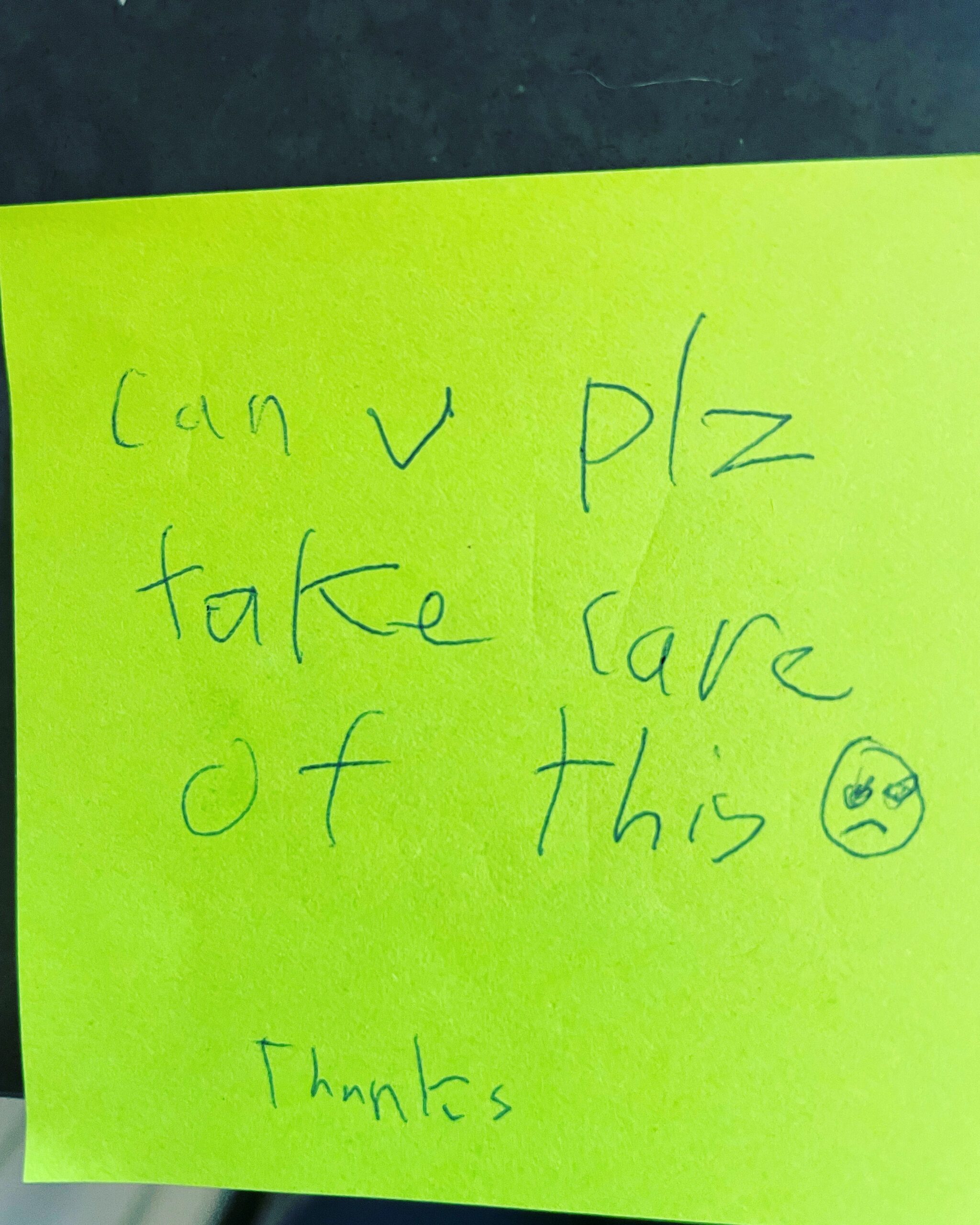
My 9-year-old son recently left a note on his dirty breakfast dishes:

Can u pls take care of this ☹️Thanks

The fact you must know is that he placed the dishes on the counter right above the dishwasher. The ultimate in lazy maneuvers. I mean, writing the note took him longer than putting the dishes away!

While this provided a great laugh over on social media, it got me thinking about the primal nature of laziness and how it shows up in our organizations.

We see laziness as the customer service rep who can’t be bothered to listen to your real issue and look into possible options.  It’s just easier to tell you nothing can be done.

We see it in the leader who claims that adopting a more empathetic approach is too hard and takes too much time and then falls back on the old ways of doing things. Which are dying, BTW.

We see it in the colleague who decides getting to know other team members is a “waste of time” and forgets the importance of building relationships and connections in order to get things done.

So that is the answer?  Here are some options leaders like to think they have:

  • We outsource empathy to HR
  • We outsource empathy (hopefully) to AI
  • We strengthen the muscle ourselves

Let’s parse these out:

Trying to outsource empathy to HR is like a parent trying to outsource love to their child’s teacher. It doesn’t make any sense. Do they outsource kindness, courage, and effective communication? The point of empathetic leadership is that your team members know you, their leader, have their backs and see, hear, and value them. That is the only way for you to reap the benefits of empathy, including increased engagement, performance, loyalty, and creativity. It needs to be woven into the way we interact with each other. It’s not a need I “go to” someone else to fulfill.

Trying to outsource empathy AI is trickier. There are empathic AI technologies available that are helping organizations strapped for resources or staffing to provide individualized guidance and interactions in industries such as healthcare, higher ed, and finance. But the organization’s leaders have to strengthen their own empathy in order to build it into the AI models and ensure the holistic customer experience is consistent and engaging. 

Strengthening your own empathy is the smart choice. Just like going to the gym, you can build that innate human muscle if it has atrophied. You just need to put in the reps.  This is why I wrote The Empathy Edge and speak at leadership trainings, keynotes, and customer events. To clarify what empathy looks like at work (and what it is most certainly NOT), and give you actionable tips to strengthen your empathy. The results may not be immediate (who gets six-pack abs on the first day at the gym?) but over time, this is the more sustainable option that you will carry with you to great success, no matter what team you’re leading or what role you are in.

If you’re tempted to outsource empathy, please think about the reason why.

Are you too scared or feel too vulnerable to connect with your people or customers with empathy? If so, you may need to do some work on your own strengths and blind spots. And what causes that fear. Is it insecurity, defensiveness, low self-esteem?

Are you strapped for time and overwhelmed? If so, perhaps prioritization is the issue and an understanding that the work of leading IS connecting and engaging with your people. If you don’t have time for that, you may need to reassess how you spend your time. 

Do you think machines can “do it better? If so, who is teaching these machines? Where are the inputs coming from? And what happens when people interacting with AI dip in and out of workflow between humans and machines? We abhor inconsistency. That seems like a big risk you don’t need to take that could have catastrophic implications on your customer or employee experience. And also, no, to the question above. Empathy is an essential human trait about human connection. Machines will never be able to fully replicate it, even if they are able to imitate it in some scenarios.

Empathy is the most important leadership skill going into the 21st century. You can definitely augment empathy by shoring up your HR team and investing in empathic AI solutions. But you don’t want to outsource it without building it yourself because if you really believe that is possible, then you’re making yourself obsolete.

Photo Credit: Maria Ross

Cash flow, creativity, and compassion are not mutually exclusive™

Can’t Get Your Employees Back to the Office? Here’s Why

Recently, Delta CEO Ed Bastian talked to BusinessInsider about the real reason there is tension around the return to office (RTO). So simple. So ignored.

Your employees’ work and life patterns have been forever changed. Employees crave flexibility. They are not going back unless it works for them.

The Pandemic showed knowledge workers that it’s possible to be creative, productive, and connected while working remotely or even traveling. Companies didn’t stop innovating or selling goods and services. They even came up with new revenue streams. The lockdown forced many local businesses I know to finally dive into eCommerce because it was the only way to stay alive.

And workers learned how well they could balance personal and professional life working from home. They spend less time commuting. They can better deal with childcare, aging parents, and their own diverse needs – from being introverted to living with a disability – in better ways.  It opened employment opportunities to many talented workers who live far from big cities.

They thrived. And so did their work, and so did their businesses.

But the 2023 State of Workplace Empathy Report showed us the ridiculous gap between CEOs and their workforces. CEO on average tend to have come up learning older leadership styles. They of course adapted to the chaos of the last three years because they had to. And that led many workers to believe they had evolved their leadership styles as well.

But they didn’t. Many leaders thought – and still do – that all this flexibility was temporary and they can now go back to their regularly scheduled programming.

They never really evolved. They coped. And that is why they’re flipping back to what they know:

If I can’t see you, if you’re not in the same room, we can’t get any work done or achieve our ambitious goals.

It’s the only way they know how to lead and hold people accountable.

So basically, they learned nothing.

But workers learned a lot. They saw the promise of flexible work. They thrived in being able to fit in morning yoga, afternoon soccer games, and even being able to cover having a sick kid at home WHILE working hard. Many of them improved their mental health, got fit, and reconnected with their families.

Why on earth would they willingly go back to the way things were? Especially if the culture was lacking to begin with.

And so…some leaders, once again refusing to get it, think the answer is to “perkify” the office. Full-service cafeteria! Workout facilities! Cool new office space! On-site laundry!

I’ll be the first to admit, that is all super cool and generous. It’s empathetic to provide your workers with all the things they need to manage their life so they can contribute their highest potential to their work.

But it only works if going back to the office WORKS for your people. And it only works if you have a culture worth going back to office for.

For many people, it still doesn’t. They need that flexibility. What they gained working remotely still outweighs all the “perks” their company can offer onsite.

It’s not about getting people back to the office so leaders can feel more comfortable with how to manage them. What is the real reason you want them back in the office? Be honest!

  • Is it the investment in office space you make?
  • Is it wanting to support small local businesses that are struggling because workers are not coming downtown anymore?
  • Is it your discomfort or misunderstanding of how to collaborate and innovate remotely?

All of these reasons can be addressed with intentional learning, training, and experimentation. You can thoughtfully determine – with input from your people – what actually warrants in-person collaboration.  You can also minimize your discomfort through coaching and training or explore industry best practices to learn how to effectively lead in a hybrid world. 

Just because you don’t know how doesn’t mean you can’t learn!

But…there is one big reason that you need to be honest about:

Do you trust your people?

If you don’t, either you’re not hiring the right people, mistrust is rampant across the organization (you set the tone), or your leaders have connection and control issues that need attention.

And who wants to come back to an office culture like that?

Culture is an issue that can’t be solved by unwillingly dragging people back to the office. So stop forcing the genie back into the bottle and figure out how to stay flexible, upskill your leadership and enhance your culture.

Photo Credit: Anastasia Nelen, Unsplash

Cash flow, creativity, and compassion are not mutually exclusive™

What Leadership Success Requires in Today’s World

Leaders today need to understand the assignment. And it’s no longer about telling people what to do like a ruler from on high,, filling out paperwork, or even getting a cushy office. Unless your WFH space is indeed, decked out and super-glam.

So I ask you: Do you fully understand the assignment….or are you working off an outdated model of what skills you need to be a successful leader?

Leadership in the past was all about command and control. You did the job so well, you were promoted to lead others doing the same job. And so on. And so on.

But many people who are excellent at “the work”are never taught how to actually do the job of leading.

Leading requires a different mindset, skillset, and frankly, temperament. It’s not the same as doing the actual work.

In a world where talented workers have options, where people are demanding respect in the workplace, and where the data now tells us that innovation, creativity, and engagement increase when the right leadership is in place, here’s the assignment as it stands today:

  • Foster collaboration. Diversity enables your organization to look at challenges from every angle without missing anything. And it enables the best ideas to rise to the top. It is no longer acceptable to simply hire people who look and think like you, silence dissenting voices, or create fear and competition among your own people.
  • Take the time to get to know your team as individuals. What motivates them? What are their lives like? Who do they want to be? And you must tailor communications, incentives, and career development accordingly. Invest in your people. Yes, it takes more time. Yes, it’s your job now if you want high performance and to ensure you get your own bonus. No, it’s not distracting you from the work. It IS the work of leading.
  • Care about people as human beings. Understand their context. Empathetically listen before you start preaching. Accommodate for their challenges and differences. Get as personal as people are comfortable getting. Create a culture where people have each other’s backs. Be willing to be vulnerable and encourage connection and love for each other. You can encourage high standards, expect excellence, and be compassionate. We are not machines. We cannot turn our struggles, challenges, or mental health issues off to put on some “professional” facade.
  • Embrace failure and admit mistakes. No one ever believed you knew it all anyway, That’s not the job of leading. The job requires risk taking and encouraging new ideas. Celebrate and learn from things not going right. It means you are innovating or getting better.  If you’re still parroting, “This is the way it’s always been done,” then you’re done. 
  • Be Humble: If you can’t admit you’re wrong, what are you doing? Everyone around you knows you were wrong and when you don’t admit it, you just look foolish and lose people’s trust. If you are still puffing out your chest, acting like you’re “better than”and not sharing credit or space because you think that makes you the Big Dog, it’s time to step aside and let a leader with humility take over to get better engagement and results.

Let me be clear: These are not niceties. They are not a waste of time.  They are not distracting you from the work. This IS the work of leading. (TWEET THIS!)

These are the skills required of successful leaders today. You are absolutely required to inspire, listen, empathize, develop, collaborate, and foster trust.  And yes, deliver results.

If you are lucky enough to lead people, then please, understand the assignment.

Photo Credit: Desola Lanre-Ologun, Unsplash

Cash flow, creativity, and compassion are not mutually exclusive™

Why Can’t Love Be Part of Your Business Model?

Think about your organization’s values for a sec. Oh, and if you don’t have those articulated, we should probably talk

I bet you have values such as integrity, honesty, innovation, fail fast, or others that are similar. Maybe you have something like, Take Risks or Customer Obsession, or even as one client of mine did in the past, Embrace Curiosity – which I always loved, especially as it relates to empathy!

But do you have the word “love” anywhere on that list? Does even the thought of love in a business context make you feel a bit nervous?

While it’s Valentine’s Day and we’re talking about love in all its forms this time of year, I bet you never thought about including that word in any sort of business communications whatsoever. 

Except maybe to say “We love our customers” or “We love a challenge”

Your invitation today is to think about the role love plays in your company’s mission, culture, and success. In the way, you operate with each other. And…to not be afraid of it anymore.

Of course, I don’t mean romantic love. Although I, and a few others, all met our spouses at one particular company I once worked for! I’m talking about love in its truest form.

Last year, I devoured bell hooks’ book All About Love: New Visions, in which she explores the fact that we don’t all have a common definition or construct around love, even though it’s one of the most important human emotions. And that is part of our problem individually and as a collective world. 

This book got me thinking about what I really believe love to be. I’d never really thought that much about it before. And she goes on to talk about how we conflate love with romantic love or caring, or even fondness. 

For those of you who don’t know her, Bell was an American author and social activist, writing about race, feminism, and class. She explored the intersectionality of race, capitalism, and gender, and what she described as their ability to produce and perpetuate systems of oppression and class domination. She published more than 40 books ranging from essays to poetry to children’s books and appeared in many documentary films, as well as being a lecturer. She passed away in 2021 and, to my own detriment, that was the first time I ever heard of her so I began reading her work.

bell writes that Love is a combination of care, commitment, knowledge, responsibility, respect, and trust.” She also states that “To love well is the task in all meaningful relationships, not just romantic bonds.”

Commitment. Responsibility. Respect. Trust. Required in all meaningful relationships. If that doesn’t have a place in organizational culture, I don’t know what does.(TWEET THIS!)

Our workplaces are where many of us spend the bulk of our time. If you add up the time each week, you often spend way more of your waking hours with your work colleagues, clients, or customers than with your own family.

How can love not have a place in those essential relationships?

We don’t have to think of love romantically. We can think of it exactly how bell describes it. Love means caring. It means commitment. It means honesty, respect, and trust. As we break free from outdated models of corporate culture and dysfunctional relationships with colleagues or customers, we can see that love absolutely needs to be part of the equation.

A while back, I wrote a blog post called Choose Love about embedding love into your values and business model. No matter what you do. No matter how big or small your organization. 

No matter who you are, you have influence.  Whether it’s 100,000 followers, a team of 150, or your email list is just your mom and your best friend. 

Whatever you’ve got, use it. 

Never underestimate the importance of your work or message no matter what your role. It may seem trite, but if you can influence or inspire even just a few, then you’ve done your job well.

Now more than ever, in these tumultuous times…when folks are feeling raw, vulnerable and afraid…now is the time to use your voice and choose love – as a leader, as a colleague, and yes, as an organization. 

You can absolutely build love into your values, leadership style, or yes, business model. Like this:

  • Love yourself and be self-confident so you don’t feel the need to bully others or let bullies win over you
  • Love your neighbors and colleagues so that all people can feel accepted and appreciated
  • Love your clients so you can bring real, honest value to them
  • Love your customers so you can make their lives better with your products or services
  • Love your partners so you can create wins  that benefit everyone
  • Love your community so you can collectively pull everyone up together
  • Love your environment so its beauty and nourishment enriches generations to come
  • Love your family and friends so they have a firm foundation to fully spread their own love to others

Here’s what I know to be true: No matter what your religion, nationality, gender identity, or sexual orientation, the only thing that matters is how you show up in the world and love. You are the example when you think no one is watching – because sometimes only YOU are watching, and you want to be proud of what you see.

Same thing goes for your company – maybe you’re not world famous, maybe you don’t think the press will care about you. Or perhaps you think you’re so large that such a personal value doesn’t impact your day-to-day work. I’m here to tell you, that’s not true. It all matters to someone, somewhere, sometime.

Choose love. Start small and practice love with whoever is in your circle of influence right now. If that’s just your family and friends, choose love. If that’s thousands of employees, stakeholders, email subscribers or Instagram followers, choose love.

We’re in this together. But we need to show up in ALL areas of our lives, and business, too. Don’t be afraid to make work personal.  Get aligned. Choose love. 

PS: This post comes from my February Hot Take episode on The Empathy Edge podcast. If you’d like to listen to this post, please click here.

Photo Credit: Michael Fenton, Unsplash IG: @michaelrfenton

Cash flow, creativity, and compassion are not mutually exclusive™

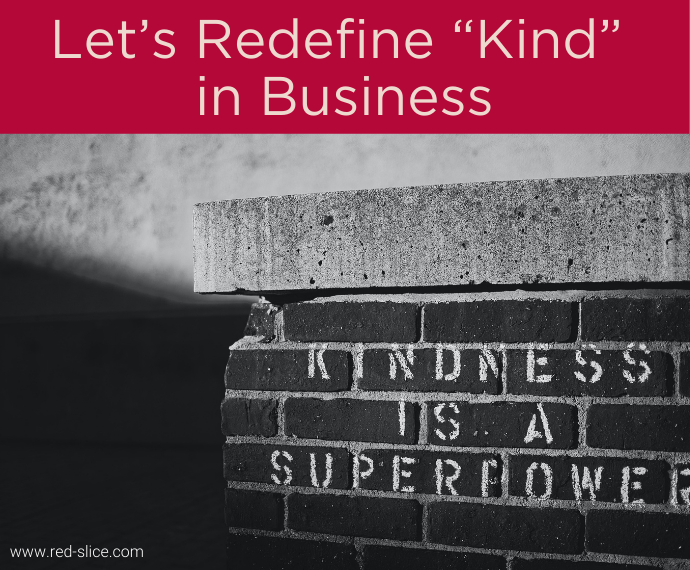
Let’s Redefine “Kind” in Business

Conscious capitalism. Compassionate workplace. Empathetic leadership. Kindness at work.

What do all of these terms even mean?

Many times throughout my career, I’ve dealt with dysfunctional workplace cultures, leaders who were at best disinterested and at worst emotionally abusive. Co-workers that yelled at me. Like, screaming so nonsensically, I had to hang up on them.

We talk about this behavior os “unprofessional” or “counterproductive.” But I have a better term. It is mean. It is unkind.

But what does it mean to be kind in business?

Is it simply bringing cookies to work, or covering for a coworker, or saying please and thank you? Is it letting people walk all over you, or shrinking back, or saying yes to everything? Nope.

Let’s redefine kindness in business to mean….

clarity. Being crystal clear about instructions, expectations and next steps. So no one is left unprepared or guessing.

...listening. Holding space for other ideas and viewpoints with judgment or defensiveness.

managing expectations. So one is ever disappointed. Contracts, agreements, clearly worded objectives and goals.

random praise. It’s not always about telling people what they can do better. It’s about sharing what someone did well, and doing it everyday. Not just during a performance review or project debrief.

good timing. Showing up on time to respect someone’s time. Managing meetings so goals are met in a timely manner. Knowing when to share something with the group and when a private conversation is required.  Giving feedback in a timely manner.

…having tough conversations. Not avoiding conflict but openly and directly discussing when tensions are running high. It’s kind to address issues rather than sit on them and fume.

…loving honesty and directness. Honestly saying what you think and how you feel because you genuinely care. “I share this because I want was is best for the team and for you” versus “I share this to cut your down, shame you and make you feel bad.” See also Good Timing as a complement to this.

...admitting when you’re wrong. You respect others when you admit you were wrong about something and find a way forward together. You set a model that failure is okay and risk-taking is encouraged.

Clarity, listening, managing expectations and all the rest may seem like simply good communication tactics. And they are. But when done with love and respect for others as individuals and thinking, feeling, human beings, they become kindness. (TWEET THIS!)

More on how kindness and empathy show up at work:

Why does purpose matter?

5 ways your business can make the world a better place

3 ways to practice empathy at work

How to redefine success with empathy

Use your platform to do good

Photo Credit: Andrew Thornebrooke on Unsplash